
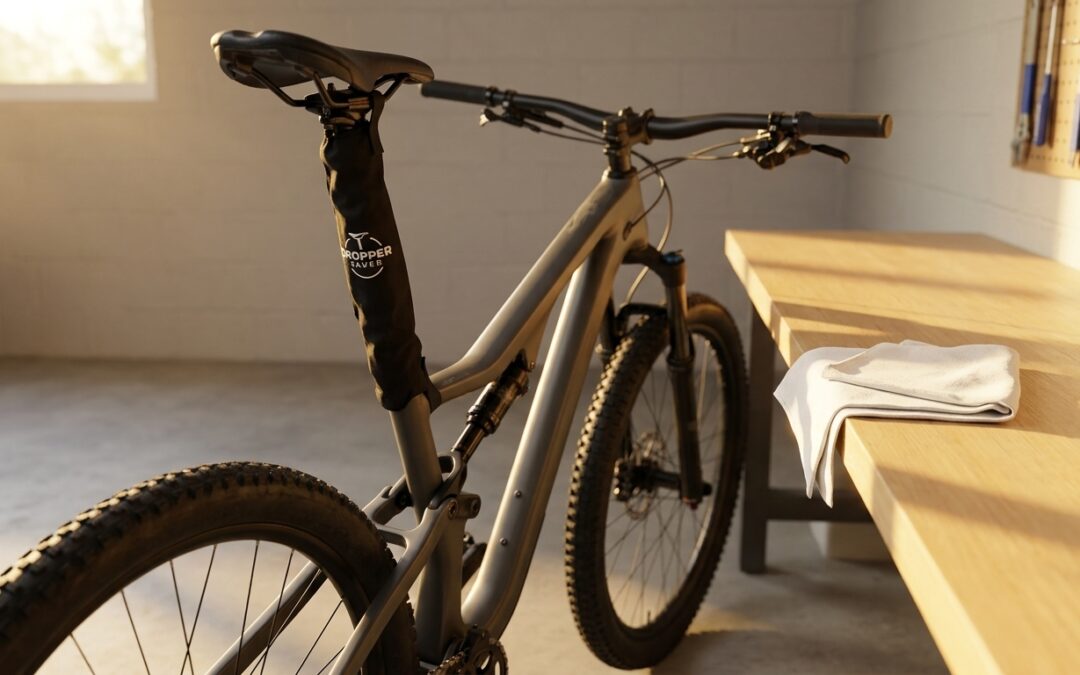
Dropper posts are not maintenance free, but the routine is simpler than most riders think. Here is a realistic schedule that keeps a dropper healthy without turning bike care into a part time job.
The schedule at a glance
| When | What | Time |
|---|---|---|
| After every ride | Wipe the stanchion, dry the cover | 30 seconds |
| Monthly | Check return speed, play, collar grime, cable tension | 5 minutes |
| Every 50–100 hours | Lower service (clean, inspect, regrease) | 1 hour / $80–$120 at a shop |
| Every 100–200 hours | Full service or cartridge swap | Shop job for most riders, $150+ |
After every ride: 30 seconds
Wipe the stanchion with a clean rag, especially after wet or dusty rides. If you run a Dropper Saver, pull it off, give the post a quick wipe and let the cover dry if it is wet. Do not point a pressure washer at the seat post collar when you wash the bike. The wiper seal is designed to keep splash out, not a 100 bar jet.
Every month or so: 5 minutes
Cycle the post through its travel and pay attention. Is the return as fast as it used to be? Any new play in the saddle? Any oil residue or grime ring at the collar? A quick monthly check catches problems while they are still cheap. Our guide to the warning signs of a dying dropper covers exactly what to look for.
While you are there, check the cable tension if your post has a mechanical remote. A sticky lever is often just a cable issue, not the post itself.
Every 50 to 100 hours: lower service
This is the one most riders skip. A lower service means sliding the lower tube off, cleaning out the old grease, checking the bushings and seals, and regreasing. Most manufacturers recommend it every 50 to 100 hours of riding, which for a weekend rider is roughly once or twice a year. You can do it at home on many posts with basic tools, or a shop will do it as part of a standard service.
If you are doing it yourself you will want the manufacturer’s service guide for your model, a torque wrench, suspension grease and a clean bench. Budget an hour the first time. RockShox, Fox and OneUp all publish decent service documents for their posts.
Every 100 to 200 hours: full service
A full service includes the cartridge or air spring internals. Some cartridges are sealed and get replaced rather than serviced. This is typically a yearly job for frequent riders, or every couple of years for occasional riders. Expect $150 or more at a shop, depending on parts.
Adjust for your conditions
Those hour ranges assume mixed conditions. If you ride wet clay all winter, halve them. If you ride dry hardpack and the bike lives indoors, you can stretch them. The honest test is the stanchion: if it is filthy every time you look at it, your dropper is living a hard life and the service intervals should reflect that. Protecting the post changes that maths more than anything else on this list.
The cheapest item on the schedule
Everything above gets easier and less frequent if less dirt reaches the post in the first place. That is the whole point of a dropper post cover. A Dropper Saver is $15.95, weighs 26g and fits in under 5 minutes (here is how to fit one). It will not replace servicing, but it keeps grit and water off the wiper seal between services, which is where most of the damage starts. To be honest, it is the best dollars per kilometre upgrade you can make to a part that costs $200+ to replace.
Protect your dropper post for $15.95
Dropper Saver stops the dirt that causes $200+ dropper failures. Worldwide shipping $7.95.